Tag Archives: work

Billy Idol Bust

Standard
Billy Idol Bust

Hello! Johnny and I celebrated our birthaversary at the beginning of June and purchased summer concert tickets as our gifts to each other. It’s traditional that the fifth wedding anniversary is musical fusion, right? We enjoyed two wonderful evenings at Blossom Music Center seeing The Strokes and Josh Groban and both shows completely exceeded our expectations. The final concert on our lineup was Billy Idol for his “It’s A Nice Day To Tour Again” tour… Or was it? Lol, it definitely wasn’t because we didn’t even end up going SMH!

Johnny and I both get up around three in the morning for work so tell me why we both thought it was a great idea to get tickets for a show falling on a Sunday? Clearly we got wrapped up in the birthaversary excitement and weren’t thinking clearly at all! For years, Johnny and I literally do nothing on Sunday and we call it our “day of lay” and we weren’t looking to make any changes to our routine even if it was for hot AF Billy Idol. We did, however, give it our honest to goodness best shot.

The concert was set to start at seven thirty (SO late!) and we spent our morning and afternoon binging Supernatural. We both got dressed up (Peep that OOTD soon!) and went to get dinner at On Tap before the show. It felt so foreign to be up and moving on a Sunday but we were doing the damn thing and couldn’t wait to get our grub on. We were so hungry!! At dinner we ate our fill – a burger for Johnny and spinach artichoke dip and sweet potato fries for me. And when our plates were clean? We were filled to the brim!

After our plates were cleared, Johnny and I had a decision to make. Option 1) Attend this concert and be wicked tired for work the following day or Option 2) Just go home. We went for Option 2! The promise of getting into our pajamas and laying down was just too strong to fight and we were genuinely relieved when we got back to our apartment. In our defense, I think we made the very mature call to call it a night. Johnny is out of paid time off as we are going on vacation soon and I refuse to take time off until our departure since the downfall of the Little Red Love Machine. It was disappointing, yes, but we felt good about the choice we made. And we both slept fantastically!

I suppose being in your mid to late thirties means you just can’t hang like you used to. Sorry we couldn’t make it to your show, Billy Idol. Maybe next time if it’s on a Saturday!!

Have you had to make last minute changes to plans recently? Would you attend a Sunday night concert if you had to work the next day? I want to hear from all of you, so leave me a comment and let’s chat! Much love. -Sarah

Managing Side Hustles Efficiently: Smart Systems For Growing Business Owners

Standard
Managing Side Hustles Efficiently: Smart Systems For Growing Business Owners

That passion project you started on weekends is officially a real side hustle, and the excitement is mixed with growing overwhelm. Suddenly, you’re not just a creator, crafter, or consultant; you’re also the bookkeeper, marketer, and customer service rep. Juggling this new venture with your daily life requires more than just passion — it demands smart systems. Creating efficient workflows isn’t about adding more work; it’s about making the work you do count, so you can focus on growth instead of getting stuck in the weeds:

Even when your side business is tiny, treating it like a “real” business sets you up for success. This means creating clear, repeatable steps for your most common tasks. Think about your entire process, from getting a new client or order to delivering the final product or service. Where do you track orders? How do you handle inquiries? What’s your follow-up procedure? Writing these steps down might feel formal, but it creates a playbook you can rely on during busy times. A simple document or spreadsheet outlining your workflow for client onboarding, project completion, and invoicing can save you hours of mental energy. This foundation makes it easier to spot bottlenecks and find ways to work more efficiently as you grow.

As your side hustle gains momentum, you’ll find that administrative tasks start eating into your creative or productive hours. This is where automation becomes your best friend. You can use tools to automate social media posting, send appointment reminders, or manage your email list. The goal is to let technology handle the repetitive work so you can focus on high-value activities. Eventually, growth might mean bringing on help, whether it’s a freelancer for a specific project or your first part-time employee. At this stage, tasks like managing payments become more complex. Having a solid online payroll system becomes essential to ensure everyone is paid correctly and on time, without you spending days buried in spreadsheets. Automating these financial responsibilities frees you up to lead your growing team.

Financial management is one of the most critical systems for any business owner. It’s tempting to mix your side hustle income and expenses with your personal accounts, but this can create a major headache at tax time. Open a separate business bank account as soon as possible. This simple step makes tracking your profitability and managing expenses much easier. Use accounting software or even a dedicated spreadsheet to log every dollar that comes in and goes out. Categorize your expenses (e.g., supplies, marketing, software subscriptions) so you can see where your money is going. This financial clarity isn’t just for taxes; it helps you make smarter business decisions, like where to invest more and where to cut back. Keeping clean records is a fundamental step in turning a side hustle into a business built to last.

Juggling a side hustle often means working in short bursts of time, during your lunch break, late at night, or on weekends. Without a central hub for your projects and ideas, important details can easily fall through the cracks. Project management tools like Trello, Asana, or even a detailed digital notebook can help you track tasks, set deadlines, and organize your thoughts. These platforms allow you to create boards for different clients or projects, set up checklists, and attach relevant files. Instead of searching through emails and sticky notes for a piece of information, you’ll have everything in one place. Using a dedicated app for communication with clients or collaborators also helps keep business conversations separate from your personal messages, creating a healthier work-life boundary.

A successful side hustle will eventually reach a crossroads: do you keep it small, or do you scale up? Efficient systems give you the data and confidence to make that decision. When your processes run smoothly and your finances are clear, you can accurately assess whether you have the capacity and demand to expand. Scaling doesn’t have to mean quitting your day job immediately. It could mean raising your prices, hiring a virtual assistant, or investing in better equipment. The key is to be intentional. Review your goals and progress regularly. If you’re consistently turning down work or feeling burned out, it might be time to think about how you can grow your side hustle sustainably.

Building a business on the side is a marathon, not a sprint. By implementing these smart systems now, you’re not just managing your current workload; you’re building a strong foundation for whatever comes next!

Featured Image By: Unsplash

How Career & Technical Education Is Reshaping The Future Of Workforce Readiness

Standard
How Career & Technical Education Is Reshaping The Future Of Workforce Readiness

Across the United States, a quiet transformation is underway in public education. Career and Technical Education, commonly known as CTE, has evolved far beyond the shop classes and vocational programs of previous generations. Today, CTE encompasses sophisticated, industry-aligned pathways in fields like healthcare, cybersecurity, advanced manufacturing, and renewable energy. As demand for skilled workers continues to outpace supply in nearly every sector of the economy, CTE programs are emerging as one of the most effective bridges between classroom learning and meaningful employment. Understanding why this shift is happening, and what it means for students, educators, and communities, is essential for anyone invested in the future of American education:

The skills gap in the American workforce is not a future problem. It is a present-day reality that affects industries ranging from construction and logistics to information technology and healthcare. Employers consistently report difficulty finding candidates who possess the technical competencies needed to fill open positions, even as millions of workers remain underemployed or seeking better opportunities. This disconnect has prompted school districts, state governments, and federal agencies to reinvest in CTE as a strategic priority rather than a supplementary offering. According to Pew Research Center, public attitudes toward vocational and technical education have shifted significantly in recent years, with growing majorities of Americans viewing hands-on, career-focused training as a legitimate and valuable alternative to traditional four-year college pathways. That shift in perception has opened the door to serious policy investment and institutional support for CTE at every level.

Contemporary CTE is not a single program or a narrow curriculum. It is a broad ecosystem of learning experiences designed to connect academic content with real-world application. A high school student in a CTE health sciences pathway might spend mornings studying biology and chemistry, then spend afternoons in a clinical simulation lab practicing patient care skills. A student enrolled in a cybersecurity pathway might earn industry-recognized certifications before graduation, giving them a measurable credential that employers recognize immediately. Many CTE programs now include work-based learning components such as internships, apprenticeships, and job shadowing, which allow students to build professional networks and gain practical experience while still in school. These programs are increasingly co-designed with industry partners, ensuring that what students learn in the classroom reflects the actual demands of the workplace.

The success of any CTE program depends fundamentally on the quality of its instructors. This is where a significant challenge emerges. Unlike traditional academic subjects, CTE courses are ideally taught by professionals who have direct industry experience, people who have actually worked as electricians, nurses, software developers, or welders. Recruiting and retaining these individuals as classroom teachers is not straightforward. Many face credentialing barriers, unfamiliar with the certification processes required to teach in public schools. Others find the transition from a private sector career to an educational setting daunting without adequate support and mentorship. Investing in cte training for teachers is therefore not a peripheral concern but a central strategy for ensuring that CTE programs deliver on their promise.

The evidence supporting CTE as an effective educational model is substantial and growing. Students who complete a CTE concentration consistently demonstrate higher graduation rates, stronger post-secondary enrollment, and better early career earnings compared to their peers. Communities benefit as well. When local schools produce graduates with the technical skills that regional employers need, it reduces talent shortages, supports economic development, and strengthens the tax base. States that have made sustained investments in CTE infrastructure have seen measurable improvements in workforce readiness metrics, and the return on investment for public funding of CTE programs has been documented across multiple independent analyses.

The most effective CTE programs do not exist in isolation. They are built on deliberate, ongoing partnerships between schools and the industries they serve. These partnerships take many forms. Local businesses may donate equipment or provide guest instructors. Regional employers may collaborate with school districts to develop curriculum that reflects current industry standards. Community colleges and universities may create articulation agreements that allow CTE students to earn college credit while still in high school, reducing the time and cost of post-secondary education. Workforce development boards and economic development agencies increasingly see CTE as a core component of regional talent pipelines and are investing accordingly. The challenge for educators and policymakers is to formalize and sustain these relationships so that they outlast individual champions and become structural features of the educational landscape. When industry and education operate as genuine partners rather than parallel systems, the results for students and communities are consistently stronger.

The momentum behind CTE today reflects a broader recognition that there is no single right pathway through education and into a fulfilling career. What matters is that every pathway is well-designed, well-taught, and genuinely connected to opportunity!

Help A Gal Out!

Standard
Help A Gal Out!

Hi! It is a rare thing to truly love what you do for a living and I am one of the lucky ones who can say that. I love working with people with special needs. I love my blog. And I love being a social media manager! My schedule consists of working online in the morning and hanging out with the bunnies or going to social media content shoots. Then I am off to see clients in the afternoon and I wouldn’t want it any other way! It is such a gift to wake up every morning not mad about working. Believe you me, I definitely did when I was working my old social media management job lol. -_-

After quitting that old gig, I focused on my clients and my blog but always was looking for a social media management opportunity to dip my toes in again. Although the last experience was a dud, it is a field that I enjoy so much and still wanted to be a part of it. Good things take time and in January of this year, I started working with Empire Window Company as their social media manager and it has been SO freaking great. I legit have zero complaints and that is also a rarity! Filming at installation sites, interacting on pages, and creating content just makes me happy and I am so thankful to be able to do so fully stress free.

It has been a while since I asked, so I figured I would put it out their again… Please like EWC’s social media pages! We can be found on Instagram @empirewindowco and on Facebook too. Be sure to invite your friends! It would mean the world and I also would love for all of you to see my handiwork. 🙂 EWC has been a local family owned business for over sixty years and I am so proud to be a small part of it. Every day during my old job, I was fighting the urge to quit. Now, I am with a team that I can picture myself working with for years to come and it is simply the best. I truly didn’t think it was possible to find such a perfect fit but, rest assured, it is possible for everyone if it is for me!! ❤

Help a gal out by giving my pages some love and remember that patience is a virtue. This is ironic coming from me as I am the most impatient person ever lol. However, something good is always just around the corner!

What was the best job you ever worked? How about the worst? I want to hear from all of you, so leave me a comment and let’s chat! Much love. -Sarah

A Whole Lotta Nothing

Standard
A Whole Lotta Nothing

Hi!! Johnny and I have a very strict work week schedule. We are both up around three o’clock so he can prepare for work and I can work from home before visiting clients, then we are in bed by six thirty at the latest to do it again the next day. Needless to say, we don’t do much during the work week unless we absolutely have to to maintain our regularly scheduled programming. Then, on the weekends, we are usually booked solid with plans with friends and family to make up for our five day all work and no play cycle. After what felt like weeks of nonstop work and hang outs we, blessedly, had a low key weekend and it was amazing!!

Outside of stopping by my sister’s house on Friday for a rousing pizza party and viewing of the new Descendants movie, Johnny and I were free as birds this past weekend. And these birds wanted to stay right in their cage! We spent our days off playing games while the other one was sleeping – CyberPunk for Johnny and Pokopia for me and had TV marathons with movies and shows. I was SO excited to finally watch Obsession with Johnny which we both loved and we binged on Blockbuster and Supernatural. We just started watching Supernatural a couple of days prior and had a lot to catch up on… Only fifteen seasons but who’s counting?! 😀

I knew our tanks were running low but I don’t think I realized how much so until we had some free time to veg out. In fact, we even had plans on Saturday but cancelled because we had already become one with the couch. Because of the constant craziness of our schedule, I often begin my work day on Monday feeling like I just didn’t have enough time for myself. That is so not the case as I type this at four o’clock on Monday morning! I feel refreshed, renewed, and wide awake and it is a most welcome change of pace. That’s not to say that I don’t enjoy our weekend outings but it’s to say that sometimes it’s nice to do A Whole Lotta Nothing!

Oftentimes, we don’t notice that we’re getting burned out until it hits us all at once. I think this weekend qualifies as preventative care because any burned out-ness I was feeling has been stopped in its tracks. I’m ready to get back to the grind so bring it the heck on!!

How do you like to spend lazy days? Are you a weekend planner or do you go with the flow? I want to hear from all of you, so leave me a comment and let’s chat! Much love. -Sarah

Property Investment Companies: Why A Statutory Audit Could Save You Thousands In A Tax Investigation

Standard
Property Investment Companies: Why A Statutory Audit Could Save You Thousands In A Tax Investigation

For landlords and property investors who hold their portfolios through limited companies, the question of whether to obtain a statutory audit often feels like an unnecessary overhead. The company may be small, the accounts straightforward, and the directors – typically the investors themselves – confident they understand exactly what is in the financial statements. The case for audit in property investment companies, however, is more nuanced than simple compliance. In a sector where HMRC scrutiny is increasing, where the line between allowable and non-allowable expenditure is frequently contested, and where the stakes of a formal tax investigation are high, independently audited accounts provide protection that goes beyond satisfying a legal requirement:

Property has been a focus of HMRC’s compliance activity for an extended period. The sector involves significant capital transactions, recurring rental income streams, and a range of legitimate tax reliefs – mortgage interest, repairs and maintenance, professional fees, depreciation of furnishings – that create genuine complexity. HMRC has specific compliance programs targeting property income, including Connect data analysis that cross-references property ownership data from Land Registry against declared income on tax returns.

For property investment companies specifically, the risk areas include capital expenditure claimed as revenue expenditure, mortgage interest and finance costs classified incorrectly, director’s loan account transactions without proper documentation, and transfers of properties between connected parties at values that do not reflect market rates. Businesses whose accounts are properly maintained by a professional UK accountancy firm throughout the year with clear classification of capital versus revenue expenditure, properly tracked director’s loan accounts, and regular bank reconciliations present a significantly cleaner picture when HMRC attention arrives. A well-maintained set of records does not prevent investigation but it substantially improves the outcome.

When HMRC opens a formal inquiry into a company’s tax return, the investigation begins with the accounts and the supporting records. A company that can produce independently audited accounts with an unqualified opinion from a Registered Auditor is in a materially different position from one that can only produce unaudited accounts signed off by the directors. This is not because an audit automatically satisfies HMRC. An audit opinion is not a statement that the tax return is correct; it is a statement that the accounts give a true and fair view.

But audited accounts signal a level of independent scrutiny that HMRC takes seriously and the audit work papers, which document the evidence the auditor examined, provide a contemporaneous record of the state of the financial records at the time the accounts were prepared. In practice, tax investigations that begin with audited accounts tend to progress more efficiently. Property investment companies that have historically operated without audit may consider engaging vetted registered UK auditors for the current and upcoming financial years as a proactive risk management decision even where no statutory requirement exists.

Property companies present specific audit challenges that require sector experience. Investment property valuation requires auditors to assess the reasonableness of professional valuations and understand the assumptions behind them. Lease classification under the amended FRS 102 has particular complexity for companies that both own and lease properties. Related party transactions are common in property structures and must be disclosed and conducted on arm’s length terms. Businesses can compare proposals from registered auditors with specific property company experience before committing to an engagement – asking each firm specifically about their experience with investment property valuation, FRS 102, and related party disclosure in a property context.

For property companies with Irish assets, directors of those entities can find registered auditors in Ireland familiar with Irish property accounting requirements – including the different VAT treatment of property transactions under Irish law and the specific disclosure requirements of Irish company law for property assets. For US real estate investments held through US-incorporated entities, certified audit professionals across the United States can be engaged through a matched process that identifies firms with relevant real estate sector experience.

The accounting foundation of a property investment company audit begins with complete and accurate records of the portfolio – title deeds, mortgage and finance documentation, tenancy agreements, service charge accounts, and repair and maintenance invoices. These should be maintained not just for audit purposes but because they are the records HMRC will request in any inquiry. A professional accounting firm providing ongoing management accounting services to property investment companies can ensure that these records are maintained to the standard both the auditor and HMRC expect – with clear classification of expenditure, properly maintained rent rolls, and regular reconciliations of the mortgage and director’s loan account balances.

For audit firms managing a portfolio of property company audit engagements – particularly those with year-ends that cluster around the same periods – specialist audit outsourcing and file preparation services provide the additional capacity needed to maintain quality and meet deadlines across the full portfolio without overstretching the permanent team.

Careful organization, an excellent team, and professional help can be most beneficial should your company ever be audited. Get started with the advice above!


Yay For 30K!

Standard
Yay For 30K!

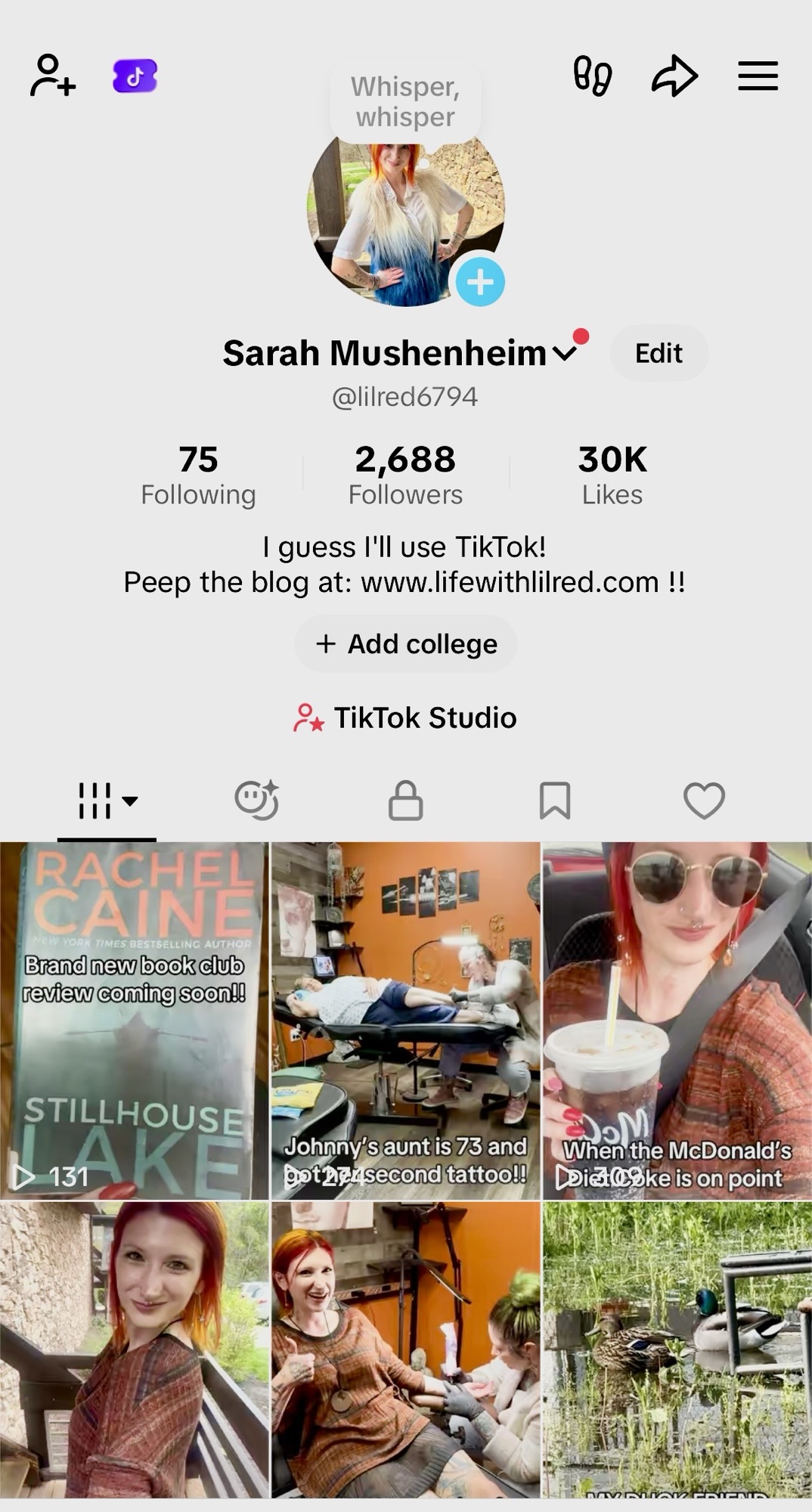
Hello and hurray!! Way back in March of last year, I threw caution to the wind and decided to make a TikTok. I had just left a crappy job and had some time to kill so I figured why not? As you all know, I am a word girl through and through and video content was quite a big jump for me. And, honestly? I freaking HATED it at first! However, after a few weeks I realized that TikTok is kind of fun and have been dedicated to posting daily content since I started my profile. For over a year now, I have been posting silly little videos and I am pleased to report that I just reached the 30K like landmark!

When I made my TikTok, I had no intention of going viral or becoming an influenster. It was made purely with the thought of being an extension of the content that is already posted on my blog. Just a little extra insight into Lil Red’s world in short and sweet clips. Do my videos have a crazy amount of views? Hard no. Do I have a ton of followers? Also no. But am I proud of trying something new and sticking to it? Absolutely! Video content is WAY out of my comfort zone and it still feels weird to me. So, this 30K milestone really did feel like a pat on the back for giving it a go and having some laughs along the way.

When it comes to my blog, creating daily content feels like second nature because I have done it for so long. It has truly been an exercise in always looking out for the little things that make life special. With that mindset, making video content and maintaining a streak just feels good. TikTok really has become part of my daily routine and even if it’s not blowing up, it’s still there and that’s all I can ask for. It’s another corner of the internet carved out by yours truly with a lot of care. Somewhere that my creativity shines and if people like it, that’s nice!! 30K likes is even nicer, though! 😀

If you feel the urge, give me a follow on TikTok @lilred6794 . I can’t wait to see you there! ❤

What is your favorite social media platform? How do you feel about creating video content? I want to hear from all of you, so leave me a comment and let’s chat! Much love. -Sarah

Don’t Trip Up: Business Trip Mistakes To Avoid

Standard
Don’t Trip Up: Business Trip Mistakes To Avoid

A productive business trip requires plenty of planning ahead. Besides thinking about how that important meeting or sales pitch is going to go, you need to consider all of the fundamentals like how you’re getting there, where you’re staying, and what you will pack. Below are just some of the blunders that could trip you up if you’re not careful:

If you’re the boss, you get to set your own travel policy. But if you’re an employee, it’s possible you may have to stick within a strict budget and potentially stick to certain providers when it comes to hotels, flights or even restaurants. Review any company travel policy rules before you book anything so that you know what your limitations are.

Unless it’s an emergency business trip, you should avoid booking accommodations and flights at the last moment. While you can sometimes access last minute deals by booking late, you may be stuck with limited hotel options and awkward flight times. Start looking into this at least a few weeks in advance so that they’re all sorted.

Not all types of accommodation are going to be fit for your stay. While a hostel could save you money, it might not give you the comfort and privacy you need when preparing for a presentation. On the opposite end of the spectrum, you don’t want to overspend on a plush hotel for a visit that may not even be that important. Don’t forget to consider short term rentals – some of these may be better suited to longer stays and they’ll give you more privacy.

It’s easy to forget about time zone differences and end up arriving later than planned. If you’ve got an early morning meeting, make sure that you’re not flying in late at night. If you have to communicate with people back at the office, make sure to also consider the time back home before calling.

Consider allowing some ‘buffer time’ within your trip – this is extra time allowed for delays such as cancelled flights, late trains, heavy traffic, or accidentally arriving at the wrong building for a meeting. Arriving early before any business interactions are due and giving yourself plenty of time to get from A to B will allow you to stay relaxed and could avoid any late arrivals to important meetings.

There are a few key items that could be useful to bring on your business trip. These include:

  • Portable power bank: Bringing a portable power bank will stop you from running out of battery on your devices if you can’t find an outlet.
  • Portable Wi-Fi router: If connection is spotty and you need to conduct a presentation, a portable router could save the day.
  • Travel adapter plug: When traveling abroad, outlets may be different and will require an adapter.
  • Travel iron: This can help you to keep your clothing crease-free on the go.
  • Backup documents: In case you lose your phone or run out of battery, consider bringing paper copies of flight information, hotel bookings, or business meeting details.
  • Business cards: Useful to have for networking.

Finally, consider that there may be cultural differences – especially if you’re traveling to a different country. This could include different business customs. For example, in Japan, it’s common to use a bow instead of using a handshake and to offer a gift during business meetings. Punctuality attitudes can vary around the world too – in some countries, arriving five minutes early is advised, while in others arriving a half an hour late is not frowned upon.

With these tips, your business trip will go without a hitch!

Featured Image By: Pexels

How To Make Your Career Go Further

Standard
How To Make Your Career Go Further

Making your career go further doesn’t always mean working longer hours or getting louder in meetings. You don’t also suddenly become a thought leader on LinkedIn, because that’s just cringe. But sometimes it’s just about making the smarter moves that stack up and put the odds in your favor without burning yourself out or pretending to love the hustle culture that we all prefer not to involve ourselves in. Careers tend to store when the learning stops, not because you’re not capable, but because industries evolve faster than most job descriptions. New tools are appearing every day, but the expectations are shifting with them. Skills that were impressive five years ago become just fine now and basic knowledge. Staying curious and adding fresh knowledge is one of the easiest ways to stay relevant and employable, and this is why options like an online graduate certificate in public health appeal to professionals who want to level up without putting their lives on pause. Let’s take a look at some other tools to help expand your career:

Furthering your education is not just about collecting credentials like Pokémon cards. It’s about sharpening how you think. And learning teaches you to solve problems faster and spot patterns sooner. From here, you can make decisions with more confidence in whatever career path you take. Employers pick that up. So do clients, collaborators, and promotion panels. So you don’t need to become the smartest person in the room. You just need to be sharper than you were last year.

This is another underrated career booster. Plenty of people work hard, but they tend to drift. Taking time to learn something new can help you to clarify where you’re actually going in your career. Are you aiming for a leadership role? Do you want a career pivot? Are you looking to have more impact, or do you want to make more money? No judgement, it costs a lot to live these days. Education gives you a structured way to explore what’s next rather than panic applying for random roles at midnight. You also have to consider your confidence when you invest in yourself. You show up differently for everybody around you, you speak with moral authority, and you volunteer for projects that you might have dodged before.

Being able to go with the flow really does matter. Modern careers rarely follow a neat ladder anymore. They zigzag, they pivot. People swap industries, go freelance, step into a hybrid role, or combine skills in unexpected ways. Education that fits around work and life makes it much easier to adapt without blowing everything up. You don’t need to quit your job or disappear for years to move forward. Remember that careers are marathons, not sprints. Big leaps often come from small, consistent upgrades. Progress doesn’t always look flashy, but it does add up to big wins.

If your career is feeling a bit stuck, it’s not time to panic. You don’t need a dramatic reinvention, you just need momentum and intention with it, and a willingness to keep learning. The glow-up will always follow through!

Featured Image By: Pexels

Lil Red Call To Action

Standard
Lil Red Call To Action

Hi hi! If you noticed from my New Year’s Resolutions Follow Up, I did indeed start a new job. I am so happy to say that I am the new Social Media Manager for Empire Window Company in Solon, Ohio. They are a local business that has been doing window, door, and siding installations for the past sixty years. It might be a slight step outside of my comfort zone but if there is one thing that your girl knows how to do, it’s how to create content! I am incredibly excited to be able to work social media management again as my last situation was a complete bust. I feel very confident in saying that I think this is the company for me and that feels wonderful!

I would appreciate it SO so mucho if all of you would help a Lil Red out. Please give a follow to Empire Window Company on Facebook and on Instagram too @empirewindowco. I would love for all of you to see my handiwork as these pages get going! One of my goals has been to give social media management a final go and I have been working very hard on seizing this opportunity. It really is a gift and every interaction is a step in the right direction. I can’t wait to create and have fun with a brand new team and it would be the cherry on top for all of my dear readers to be a part of it. Many, many thanks!!

As a treat, here is me enjoying my OM-Cheese Burger from Applebees lolol:

How is your job going? Are you interested in starting a new job? I want to hear from all of you, so leave me a comment and let’s chat! Much love. -Sarah