Tag Archives: doctor

Meaningful Career Ideas For Those Who Care

Standard
Meaningful Career Ideas For Those Who Care

Do you ever feel like you want to give something back to society? If so, you are in excellent company. While many people are driven to forge careers in helping people from an early age, others often take a while to come to a decision. There are plenty of stories of incredibly successful people who trade in their career to contribute more to society, and if that sounds like something you would like to do, then there are a multitude of options. The big question is – which meaningful career will mean a lot to you?

Sure, you could become a doctor, attorney, or professor in any field you like. But if you are making the decision to change careers mid-life, you have to bear in mind that it could be difficult to make such a leap, due to the financial implications – and your own personal responsibilities. So, let’s take a look at some of the other options available to anyone who wants to make a switch and start helping others out:

Teacher:

Preparing the nation’s youth for a healthy and prosperous life is a vital role, yet one that is often pilloried. However, don’t believe the expression ‘those that can do, those that can’t teach’ – nothing could be further from the truth. Teachers are pivotal to the success of this country and watching your students grow and become young adults is a highly rewarding career. If you have experience and life skills or have excelled in your field, why not think about becoming a certified teacher and helping large groups of kids achieve great things? Since the pandemic, teaching can be done online too. Perhaps you might like to Teach English Online for a few hours a day from the comfort of your home. It would be an excellent way to get a feel for if this is something you would like to do on a full time basis.

care10

Pexels Image

School Counselor:

On the subject of schools, teaching isn’t the only role that can make a difference to people’s lives. School counselors are becoming an important part of the education system, and it’s a well-paid role that will allow you to help students overcome their problems. Personal development and education is such an important part of growing up for kids, yet the sad truth is that many of them struggle. Whether it’s due to problems at home, behavioral issues, or any other matter is irrelevant – but as a school counselor, you will be responsible for helping those kids to make the best of their abilities while working on the things that trouble them.

Medical Assistant:

Let’s move on to health care. It’s an incredibly safe career to get involved in, given that it is entirely recession proof – everyone will always need treatment for illness or, in the case of medical assistants, ambulatory or emergency services. On your medical assistant training, you will learn how to work with patients under the direction of a physician in a setting similar to an emergency room. You will complete paperwork for patients, do things like administer medication, check vital signs, and assist in minor surgeries. In short, you will assisting in emergency services in the vast majority of cases – it’s a highly important role.

care11

And you’ll learn how to work that thing!!

Licensed Practical Nurse (LPN):

A Licensed Practical Nurse’s role is similar to that of a medical assistant, but there are a few key differences. There’s plenty of additional info out there that describes these subtleties, but mainly, you will work under the direction of a Health Care Provider or a Nurse. Just as a medical assistant, you will help with medication and checking vital signs, but you’ll also be responsible for personal hygiene and providing ongoing care to patients. The key difference, however, is the setting that you will work in – most LPNs work in clinics rather than emergency rooms.

Therapist:

There is a therapy for any illness, condition, or injury, so your choice of options here is vast. For those interested in psychology and the mind, becoming a CBT professional could be an attractive option, where you will coach people through their problems by changing the way they think. A counselor or therapist for mental health is also a great option. This could be a private practice or in a hospital or recovery center that features Knightsbridge Mental Health Furniture for each patient’s comfort. For those more interested in treating injuries or other physical conditions, why not consider a physical therapist role? There’s speech therapy to consider, too, where you will be helping people overcome vocal problems. If you prefer working with people long-term, on a one-to-one basis, a therapeutic career could be an ideal choice.

care12

Don’t forget about massage therapists!

Paralegal:

Finally, paralegals are vital to the legal profession, yet remain mostly anonymous. No, you won’t get the stardom and hotshot status of being a prosecuting or defending lawyer – but you will be integral to their success. A paralegal’s role involves supporting lawyers behind the scenes, researching evidence and statements, and ensuring that paperwork is up to date for each case. It’s a field with plenty of prospects, too, and some paralegals even decide to resume their studies and become attorneys.

There is a vast world of caring careers out there, and the above list is just scratching the surface. Do your research, study hard, and end up with the career of your dreams!

Mostly Bloodless Medical Jobs For The Squeamish

Standard
Mostly Bloodless Medical Jobs For The Squeamish

A lot of people fancy a career in the medical sector. But when they sit down and really think about what it involves – cutting people open and having their guts spew out – suddenly it doesn’t seem so appealing. But the good news, is that not everybody in healthcare is ripping open chest cavities and reattaching severed limbs. In fact, there are plenty of positions which don’t involve any blood at all, like the following:

Don’t let your squeamishness put you off from getting a job in this sector. The jobs listed below will definitely not require a radiation suit or assisting with surgeries as well as minimal blood! Perfect for those who would like to work in the medical field without all of the yuck that potentially comes with it. Let’s get started:

Respiratory Therapist: One of the best ways to become valuable as a healthcare worker is to drill down and focus on a single area of expertise. Respiratory therapists do just that, focusing on helping people who have trouble breathing and doing tests to get to the bottom of their condition. The good thing about becoming a respiratory therapist is that there is comparatively little blood involved. You will have to insert tubes into patients’ windpipes, but if you can get over that hurdle, you’re almost home and dry.

Like other jobs in healthcare, experts believe that the demand for respiratory therapists will remain strong over the next five years, at least. Respiratory therapists are likely to be in high demand thanks to the increasing prevalence of lung-related disorders, such as asthma and COPD. Salaries are competitive. For just a couple of year’s training to get an associate degree, a trained respiratory therapist can take home $60,000 per year.

Nutritionist: Chronic diseases and obesity are currently the major cause of disability in Western countries like the US. Yes, people need heroic medicine if they break their leg, and they need antibiotics when they get an infection, but the vast majority of illness is the result of diet and lifestyle. Your job as a nutritionist is to help people modify their diets, change their habits and chip away at the underlying causes of their illnesses.

A cool thing about being a nutritionist is that by working closely enough with patients, you can help them not only manage their chronic diseases but reverse them, too. The medical literature is full of studies in which people with conditions like heart disease, angina, and diabetes get better, all by shifting their diets to healthier options.

The obesity crisis isn’t going anywhere, and so dietitians are likely to remain on the front lines for a long time to come, helping to motivate people to choose healthier behaviors and options. Pay averages around $57,000 per year, though it’s possible to make more by getting high profile private clients, selling books, and blogging.

Radiologist: Radiologists are doctors with relatively few actual contact hours with patients. They spend most of their time reading up on both the latest diagnostic technology and the best lab improvement software such as NovoPath 360, helping them to better collaborate with other staff such as lab techs and find out how to deliver the right treatment to their patients. Radiology is currently an exciting field: scanning technologies are progressing at an exponential rate and before long, radiologists will be able to view every cell in the body at sub-micron resolutions, allowing them to pinpoint the exact source of a person’s illness.

As a radiologist, you’re also liable to work with technology in the future, specifically artificial intelligence, perhaps the single most important advance in the medical sector for decades. With the help of AI, radiologists seek and identify diseases in their patients and offer treatment options. According to http://www.wikiprofessional.org/index.php?title=Radiologist_Salary the average salary for a radiologist is $130,000 per year. However, the top 10 percent earn more than $187,000.

Radiation Therapist: The job of a radiation therapist is to administer cancer treatment to patients. Their purpose is to not only operate the equipment itself but explain to patients their treatment options. According to https://www.liverpool.ac.uk/medical-imaging-and-radiotherapy/, you need an accredited degree or postgraduate program to become a radiation therapist. You’ll need all of the training that you can get to adequately monitor the progress of the patient during treatment.

Radiotherapy is expected to increase as the population ages. Currently, around 39 percent of Americans get cancer at some point in their lives. This is projected to rise to 50 percent over the next twenty years. Thus, unless technology changes, the number of radiation therapy jobs is expected to boom by more than 25 percent until 2022. That’s pushing wages up, too. A radiation therapist can earn more than $83,000 per year. What’s more, there’s no blood involved.

meddd1

Health.mil Image

Does the sight of blood make you cringe? Do you still want a job in the medical field? Then, some of the above job options might be for you!

Featured Image By: Wikimedia Commons

What Are Your Choices For Taking Care Of Your Most Senior Relatives?

Standard
What Are Your Choices For Taking Care Of Your Most Senior Relatives?

All of us are getting older and none of us can escape it. But for those in our family who are much more experienced and wise than us, life can become a little harder. The body can wear out and the mind can let us down. Aging goes far beyond the odd wrinkle and gray hair. Do you have any senior members of your family that are starting to struggle? It might be worth considering what your options could be in the not-so-distant future:

Independent Living For Longer: We all want to be independent for as long as possible. To achieve that we must be fit and healthy. That’s where things can get challenging. If you haven’t worked hard to take care of your body over the years, then it can be more difficult starting later on. Still, it is possible to improve your balance, strength, stamina, and coordination. Like everything else in life, it just takes a little bit of work, patience, and practice!

There are far more senior fitness and activity groups around today than ever before. Why not encourage your relatives to participate? While many groups might attract older people, there is usually nothing stopping you from joining in, too. You could have a lot of fun and enjoy spending more quality time with your relatives.

There are also things you can do around the home to help your grandparents live there for longer. Single story living is ideal as we get older because balance can be more tricky on steps. Climbing stairs and descending them can be challenging as knees and hip joints start to age. Safety switch devices for hobs, ovens, and faucets can also be quite handy if you’re willing to invest in them.

Some older adults with underlying medical conditions may also suffer from incontinence. If your grandparents have such a condition, try to convince them to wear incontinence pads. Be kind and patient when suggesting this solution. Encourage your loved ones to confront the issue head-on, and use respectful words. Try to be in their shoes, and be sensitive to their thoughts and feelings. No one wants to be embarrassed over something they can’t control. Everyone, including grandparents, wants to grow old with dignity and grace.

You can also arrange for personal or emergency alarms to be installed should your older relative be vulnerable. Home visits can also make an enormous difference for someone who has to live alone. This can be performed by a qualified nurse or by a volunteer from the community trained in keeping seniors company.

Career Change For You? Of course, there is nothing stopping you from taking on a completely different role in this. If you’re looking for something new to do in your career, why not consider caring? If you already have experience in taking care of your relatives, then this might be a natural progression. There will always be jobs in this line of work and there will always be a need for people with your skills.

senior1

Pexels Image

If you’re willing to put in the extra study, you might be able to pursue a career in healthcare. There are many benefits to this aside from being able to better oversee the care of your relatives. Good pensions and pay are on offer for some of these roles. There are also good prospects for promotion. Perhaps most importantly, you can find this kind of work in every state.

There will, of course, be ethical considerations should you choose to undertake any part of your family member’s care. The more personal the needs are, the more difficult this decision can be. Ultimately, your relative will want to retain her dignity. Both of you will want to trust the people that are caring for her. And you will undoubtedly want to know exactly what is happening with her care plan. Professional knowledge, even if not directly applied, can give you and your Nanna peace of mind.

Nursing Home: Has your grandparent become particularly unwell? Perhaps they are suffering from a degenerative condition like dementia? You might have to consider the option of an assisted living and memory care facility or a nursing home. Maybe you’re worried about the cost of this? Government backed initiatives exist to help those who are most financially vulnerable.

It’s important when you start your search for a placement that you find nursing homes you can trust. Use a reputable search facility online that will also give you plenty of information about what you should be looking for. Sometimes seniors are not best placed to make the final decision about their choice of home. As the closest relative, that can put a lot of responsibility on your shoulders.

So what should you look for in a nursing home? First, consider the facilities that your Nanna will need. Her long term health plan will be the biggest factor here. If your relative needs the medical attention a nursing home can provide, ensure that you will be kept up to date with their ongoing health plan.

Other considerations will include the type of senior accommodations on offer. Is the room shared or private? Are child visitors welcome or are pets able to visit? Are there mentally stimulating activities? Are the meals being provided nutritious and tasty? What about physical and fitness-based activities on offer? You might prefer to have your grandparents in a nursing home that is close to your address. However, sometimes it’s worth the long journey to a home that is just right.

senior2

Ballin

Dementia and other long-term illnesses can bring about behavioral changes. These can be deemed challenging or even violent. Make sure that you are up to speed with the home’s code and policies for managing these more volatile situations, as some nursing homes are not well equipped to deal with this.

Always visit the nursing home that you are interested in a few times at different times of the day. Bring your senior relative to at least a couple of these visits. This can be a little upsetting, but it can also be quite assuring if your Nanna seems engaged and comfortable in these surroundings. It can be hard to leave your beloved relative in a nursing home, but if a care plan is necessary, it can be the safest option.

Bringing Your Relative To You: Another option is to adapt your home to have your senior relative live with you. There will undoubtedly be a need for care in the community appointments, so you need to make yourself available for that. You may find that you and your relative lose certain rights to state benefits with this living arrangement, so consider it carefully.

There are, of course, many benefits to having Nanna live with you. You can keep a close eye on her care and you can take over many of the more challenging day-to-day tasks like cooking for her. You know she will be as safe as possible under your roof, too. Best of all, she will have all of the company she needs to stay mentally stimulated and socialized.

senior3

Aw :*)

Sharing The Caring: Of course, if there is extended family out there, then you are certainly within your rights to expect them to share the caring. Your relative is the matriarch or patriarch of the family so the rest of the family must contribute. Obviously sharing the accommodation responsibilities can involve a lot of upheavals. That isn’t always practical. But you should expect other family members to come by and spend time there.

senior4

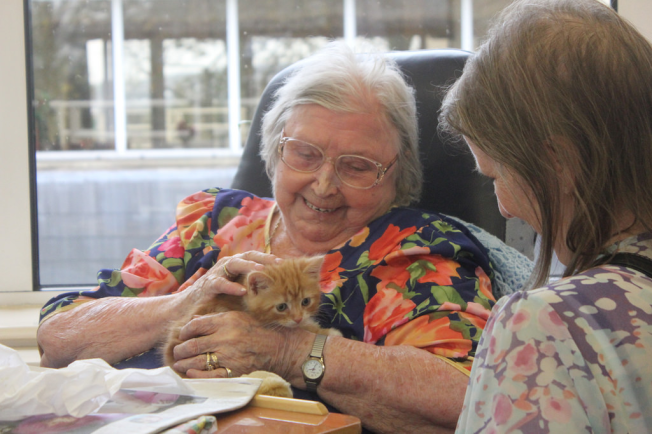
CAT!

Financially, there is likely to be more expenses for you than any siblings might have. Your senior relative may well be contributing from their pension. As for other expenses, ask everyone to chip in a fair percentage. You probably don’t expect to be paid for your hospitality or care, but medical bills on top of that shouldn’t all be on you.

By sharing the caring, all of the extended family can get involved to make sure your most senior relative is comfortable in their twilight years. Time is precious, so the others should be doing all they can to make every moment count.

Every person is different and every care plan will differ, too. In fact, they can change from one month to the next if ill health is involved. Consider all of your options before committing to something long term. What suits today may not be right for you tomorrow.

Featured Image By: Pexels

Things to Consider Before Choosing a Healthcare Career

Standard
Things to Consider Before Choosing a Healthcare Career

For people who want to help others in their job, a career in healthcare may seem like the ideal option. If you have never worked in this type of job before, there is a lot to consider before you dive in at the deep end. First, it is a path that requires a great deal of commitment, and it is likely that you will need specific qualifications depending on the area in which you want to work. However, that doesn’t mean that it isn’t accessible for a high number of people.

Like any field of work, healthcare has its ups and downs and you will want to do as much research as you can before you decide that this is the path that you want to go down. However, people who go into this field often find that it is one that is personally rewarding. So, let’s look at a few things that you will want to consider before you definitely decide on a career in healthcare:

Ask Yourself About Your Motivations: Like any career path you decide to go down, you should ask yourself about your motivations in wanting to pursue this particular field. Is helping people your number one ambition? Are you motivated by the financial rewards? Do you want to work in a job that is fast-moving? You then need to think about how strong your motivations are. The likelihood is, is that the healthcare career that you pick will require a great deal of commitment and working long hours that are often changeable. It is not the kind of career that you want to enter lightly. And you should also think twice if it is someone else who is pushing you to go down this particular road. Remember, that you are the one who will be devoting a big part of your life to this career, so you want to make sure that your motivations are your own rather than coming from someone else.

The motivation to help other people is one of the top factors that drives people into this area. If you have a great sense of empathy and a desire to help people through difficult situations, you may be ideally suited to this area. Patience is certainly a virtue in this field, as you will be working with a whole range of people, some of whom are going to be very challenging. The ability to demonstrate good communication skills is another useful skill to possess, as you will often have to be explaining certain procedures or situations to people. It also helps to be a good listener so people feel comfortable with telling you their particular concerns.

Which Specific Role Appeals to You? Of course, doctors and nurses tend to draw all of the headlines when you are looking at careers in the healthcare field, but there are an infinite amount of options that are out there. Within each medical specialty, there are jobs available that suit different levels of education and experience. You will obviously require specific training regardless of which job you go for, but you may be surprised to discover what is within your reach. It is worth reading different articles online and looking at job boards to read through their specifications. There are many specialist job sites such as https://www.staffnurse.com/jrp-dental-nurse that display some of the different options out there. Like anything in life, it pays to do as much research as you can.

Remember that every role played in a health care facility is an integral part no matter what it is you’re doing. Housekeeping, reception, cooks, social workers, and liaisons to help with paperwork and medicare part b reimbursement are all just as part of the team as doctors, nurses, and surgeons. People often seek work in the medical sector because of a desire to help people and no matter what position speaks to you, you can rest assured that you will be doing just that.

careerr

^^^ Healthcare essentials

Look at Education/Training Options: When you consider going into a career in healthcare, you have to think about the education and training that goes into it, as well. You will be well aware that it takes several years to become a doctor, so this is a big commitment to make before you actually enter the career in the first place. You need to think about how you would finance your education if you did go down this route. However, a lot of healthcare career options include training that can be done while you are on the job. So, you may need to compromise on your chosen career path if you simply don’t have the time or funds to invest in a long training period. But this doesn’t mean that you can’t find a job that is as equally fulfilling and rewarding.

You’ll Have to Protect Yourself: Now, a lot of people think that, legally speaking, they only need to protect themselves if they own a business. But that’s far from the case. A solid chunk of jobs in the healthcare field also need some sort of protection. You’ve probably heard of malpractice insurance for doctors, right? Well, that’s just one example.

Even if you’ve always dreamed of being a nurse, you will need to protect yourself in some legal form. For example, a lot of nurses will look into a nursing license defense attorney because there might be a chance of a criminal charge (such as a patient), documentation error, employer investigations, or even allegations of misconduct. So that’s why it’s so important to know why you need to protect yourself and what steps you can take to do it.

Do Your Skills and Strengths Fit in the Sector? Everyone has their own specific set of skills and strengths that they bring to every new job role. Before you opt for this particular sector, you need to be confident that your own skills match up. There are a few common attributes that are required by most healthcare professionals. To start off with, you will need excellent interpersonal and communication skills. Many of these jobs involve communicating with patients who are in a vulnerable situation, and even those that are not directly patient-facing will probably require you to work as part of a team. As well as this, you will also need a strong work ethic as many of these jobs are especially demanding. And having that sense of calm when faced with high pressure situations will also stand you in good stead. Another positive quality that it will help you to possess is the desire to continually learn new things. The healthcare field is one that is always adapting and changing, so keeping track of developments and making sure that you are up to date is essential.

careerr1

Pexels Image

Consider Your Working Environment: Working in the field of healthcare doesn’t necessarily mean that you will be in a hospital. You may work in a doctor’s office, a dentist’s surgery, a school, or even in people’s homes if you are working as a personal carer. Think about how your working environment will affect your particular career path. There may be more opportunities in a hospital but this kind of busy and often chaotic atmosphere may not suit you as a person. If you are overwhelmed just thinking about the fast paced hospital environment, then you might want to explore other options. Maybe the administrative side is more your speed. Or, perhaps you are interested in How to become a DOT drug test collector for a job in the medical field that requires less extensive training and a more leisurely pace than a bustling hospital. Don’t forget that your working environment plays a big role in your job as a whole.

careerr2

Could you see yourself working there?

Think About Your Personal Situation: As we have already mentioned briefly, a career in healthcare is likely to impact your personal life. Many of these jobs require you to work in different shift patterns and you also may have to put in long hours. This is not the case for all of these types of jobs, but you want to make sure that you are fully aware of the level of commitment that you are putting in before you go into any particular job role. It all depends on what your personal situation is currently like and what sort of sacrifices you are willing to make in order to achieve your ambitions.

Like any career path, healthcare is not for everyone. But the people who enjoy success in this area find that it is an extremely rewarding way to spend your working life.     

Featured Image By: Pexels

Is Now The Right Time To Get Into The Healthcare Industry?

Standard
Is Now The Right Time To Get Into The Healthcare Industry?

Healthcare businesses are booming at the moment. So, it isn’t hard to see why starting a firm which delivers patient care is so tempting. The problem is, that even though the landscape appears good now, it may not be in the future. Sadly, entrepreneurs see a ‘sure thing’ and dive in head first, only to have things turn sour shortly after. For obvious reasons, you don’t want this to happen! It’s essential that you think before you act. With that in mind, here are the pros and cons of starting a healthcare business in 2017:

Pro: It’s Easier To Obtain Qualifications

Most people think that they need seven years of medical training before they can open the doors. Or, they believe that some need to pay their dues. The reality is, that qualifications are a lot easier to come by today than ever before. Yes, lots of medical professionals do spend years training to get a foothold in the industry. But, it’s also possible to do it online. With courses such as healthcare administration bachelor’s degree online, there is no base that you can’t cover. As an added bonus, online classes tend to be less expensive and more convenient for a busy schedule. Getting your Physical Therapy CEUs or even an associate’s degree to get started might be more obtainable than you think.

Remember that there are also other positions available in a medical setting that might not require a degree like making deliveries to different floors, janitorial work, reception, and kitchen staff. These are all integral roles in a medical facility too. You might even find a position for a medical answering service in Houston (or your local area) to further enhance communication between the facility and patients. These are all excellent options if you thrive in a fast paced and person centered environment.

There are also roles in the medical field that would be perfect for the computer savvy. This is an especially viable option should you be squeamish around blood! Medical device software development could be where your skills lie to boost efficiency and ensure the efficacy of treatments. Data management or facility management could also be considered for a role in the medical field without being hands on.

Con: Industry Is Complex

The problem with starting out as a novice is the complexity of the industry. Simply put, there is a lot to deal with on a daily basis, and that is only the tip of the iceberg. To provide an extensive care package, it is essential to keep up with the latest trends and attend seminars. You will also need to review your practices to ensure that they are up to date, not to mention the logistical side of things. Sure, it is possible to learn as you go, but it is extremely difficult. If you’re going to succeed, you need tons of brainpower and the drive.

Pro: Returns Tend To Be High

If you’re savvy, the returns on your investment can be significant. The reason for this comes down to low startup costs. Normally, new businesses have to fork out a lot of money to break even, but healthcare firms don’t follow the same rules. For example, there is no need for an office if you provide care to people in their homes. Plus, there is no reason to hire a plethora of workers, either. As long as you can keep the initial cost down, there is an excellent chance that you will be in the black. Dwindling down the expenses with managed care contracting can also be a huge help, which is something you would benefit from exploring further.

career1

#stackingpaper

Con: Everything Is Changing

A few years ago, the Affordable Care Act came into action and changed the industry. Now, the Trumpcare legislation is about to come into effect, and everything will be different again. Some people will see this as an opportunity, which it is in some respects. Others, however, will understand that the industry is on a knife edge. Taking the gamble now could pay off, or it could leave you with nothing. Regardless, it isn’t worth the risk until you know more.

career2

Are you up for the ever changing challenge?

Featured Image By: Flickr

Boost Your Health To Increase Your Chances Of Pregnancy

Standard
Boost Your Health To Increase Your Chances Of Pregnancy

A lot of people make the mistake of thinking that as soon as you start trying for a baby, that it’s bound to happen. But in reality, it can be very different. In fact, some couples can take over a year before they manage to conceive, and they are left confused as to why it’s not happening for them. While there can be lots of factors as to why it’s not happening so quickly, you do need to turn your attention to your health – which can sometimes be to blame if you are struggling to get pregnant. But, a lot of women don’t know how to turn things around. Here are some ways that you can boost your health to increase your chances of pregnancy:

Try Losing Weight: If you are overweight, it can cause hormone imbalances in your body, which can result in problems with ovulation. In fact, you might be releasing fewer eggs every month if you are over a healthy weight range, which reduces your chances of getting pregnant every month. That’s why it can take longer for people who are overweight or obese to conceive.

Overhaul your diet so that you cut out any high-fat and sugary foods which are causing you to struggle to sustain a healthy weight. You might want to talk to a nutritionist who can give you further tips on a good diet plan. If you are consuming your five-a-day, you are bound to get back into shape quicker. And make sure that you are doing plenty of exercise in your life. If you are spending at least 20 minutes a day getting active, you are bound to shed the weight quickly! And once you are back to a healthy weight, you will find that you are likely to become pregnant quickly, too.

Decrease Your Stress: It’s easy to get stressed in your life. Work, family, mental health, and the actual process of trying to get pregnant can leave you feeling the stress, especially if it’s taking longer than you thought to conceive a baby. But if you are stressed out, it can affect how long it takes to get pregnant. For one thing, it can affect the gland in your brain which regulates your hormones which tells your ovaries to release eggs. So you may struggle to ovulate which will significantly reduce your chances of getting pregnant.

To get pregnant, you need to be as relaxed as possible. In fact, a lot of people find that as soon as they release some of their worry, they get pregnant! So work on decreasing the stress in your life. It might be that you head for a spa day or you might want to go to a class like a yoga or Pilates session, which are also ideal for relaxing your body! You could even go to see a fertility doctor, who is sure to have other suggestions on decreasing your stress levels.

Get More Sleep: We all know that it’s important to get a good amount of sleep at night to help us stay in good health. But you might not realize that it could help boost your chances of getting pregnant if you ensure that you get enough zzz’s every night. If you are currently suffering from sleep deprivation, it can put stress on your body which will affect your immune system. And with a lower immune system which is not working properly, it will have an effect on your reproductive cycle. You are more likely to start missing periods, which will then reduce your chances of getting pregnant. You will have less chance of conceiving as you might not be ovulating regularly. Try going to bed earlier at night if you want to increase your chances of getting pregnant. And make sure that it’s quality sleep. Try and get super comfortable, so that you don’t keep waking up in the night!

boost1

Pixabay Image

Featured Image By: Pixabay

Make The Most Of Your Diet With Natural Supplements

Standard
Make The Most Of Your Diet With Natural Supplements

When a lot of people hear the word “supplement,” they often get pretty nervous. This is actually pretty understandable since, for a lot of people, the idea of a supplement is tied in with dangerous chemicals and things like steroids and weight loss pills. But in reality, a supplement is just something that you take in order to give your body things that your diet might be missing. Many of them are entirely natural and are very unlikely to do anyone any harm. With that in mind, here are some of the best natural supplements that you can take in order to be as healthy and happy as possible:

Calcium: We all grow up knowing how important calcium is in order to develop strong and healthy bones. Of course, for a lot of people that never really goes much beyond knowing that it’s a good idea to drink milk. However, in reality, milk is nowhere near as good a source of calcium as many people believe, and you actually need the fat that you find in things like whole milk in order to actually convert the calcium in it into anything useful. Because of this, many people aren’t getting the right amounts of calcium in their diets. Check out these AlgaeCal calcium supplement reviews to see how increasing your calcium levels can make a big difference to your bone strength and help treat things like osteoporosis. Of course, that doesn’t mean that there are no benefits to drinking milk, it’s just that you shouldn’t rely on it as your one and only source of calcium.

Iron: Iron is one of the most important things that your body needs. It supports the growth of blood cells, carries oxygen around the body, and does an infinite amount of other positive things. Anyone who has ever suffered from anemia can tell you just how damaging an iron deficiency can be. You can find iron in things like red meat as well as many grains and dark green vegetables. If you are someone who doesn’t eat meat (Like yours truly!), then taking an iron supplement may be a good idea to prevent you from becoming anemic.

Vitamin A: The old wives tale that eating carrots will make you see in the dark might be (unfortunately) false, but it does actually have some basis in truth. Vitamin A, which is found in many orange and yellow vegetables as well as many cereals and fish is vital for the development and function of your eyes. Not only that, but it is crucial for providing support for your immune system. There are many vitamins that your body needs but vitamin A is one of the ones that tends to be neglected the most often, unlike vitamin C and B which most people are fully aware of.

Supplement Drinks: If you have difficulty swallowing pills, you might want to consider using a supplemental drink instead. This can also include smoothies and shakes. Companies like Tmrw provide drinks that support cellular longevity, gut health, and inflammation along with a host of other benefits. This or a similar product could be an excellent alternative to standard supplemental pills.

It’s important to be aware that none of these things should be considered as replacements for any prescribed medicines and that you should always speak to your doctor before making any changes to your diet. The supplements are all entirely safe but if you’re unsure, then talking to your doctor about it really is the best thing that you can do!

Featured Image By: Pexels

Over Thirty? Time To Start Taking Care Of Your Body

Standard
Over Thirty? Time To Start Taking Care Of Your Body

Life’s all pretty well and good when we’re in our twenties. Eat too much food (Always!)? No worries, your body is on hand to make sure that it doesn’t do too much damage. Overindulged at the work party? Somehow, you’re able to get up as if nothing happened (well, almost). However, that all begins to change as we slide towards our thirties. Once we pass the big 3-0, our body stops playing ball and starts to give us a little bit more trouble than we’d like. However, if you take of your body, then there’s no reason why you can’t feel as energetic and full of life as you did in your twenties!

Exercise:

There’s no getting around it, unfortunately: you need to start exercising. This doesn’t mean you have to start visiting the gym every day, but it does mean that you need to be making sure that you get enough physical activity each day. The key to this, is to find an activity that you enjoy. If you find that you really enjoy long distance running, then it won’t feel like work when you set off on those early morning runs: it’ll be fun!

Treating Your Body Well:

Part of having a healthy body in your thirties is remembering that you can no longer push your body to the limit. You need to be taking it at ease, and making sure that it gets everything it needs to be well. For example, you can’t go out late into the night and then expect to get up early in the morning. You’ll also need to curb the amount of alcohol you’re drinking, and if you’re a smoker, then hitting thirty is a good time to quit!

30

And eating well, of course!

Nipping Problems in the Bud:

Some issues will happen to you regardless of how much you work out because they happen to everyone sooner or later. The key here, is to take steps so that the issues that might not yet have presented themselves are kept at bay. Take bone loss, which usually begins at age thirty. You should be taking supplements to keep your bones healthy. Take a read of AlgaeCal plant calcium side effects and ask your doctor for advice; if given the all clear, you’ll be able to help increase bone strength. Back pain is also common in our thirties, so avoid doing anything that might cause your back to start giving you trouble.

Happy Mind:

Our thirties can be very happy, but they can also bring with them a fair few mental woes. It’s really important that you stay on top of your mental health, and don’t let all of those freshly acquired worries build up. Make sure that you’re doing the things that make you happy, and talk about your problems should they arise.

If there are aspects of your life or body that are making you unhappy – you have the tools to fix it. This could be scheduling an appointment with a therapist or seeking a consultation with a breast augmentation surgeon in Ashburn (or your local area). A life lived with insecurities can really drag you down and there is no shame in seeking changes out if that is what you truly want. Remember, your thirties are a time to thrive and targeting the issues that make you feel insecure can set you on a far more positive trajectory.

Annual Check Ups:

Most problems can be avoided if we go for an annual check-up – teeth, hearing, and eyes, as well as screenings for any problems that might be hereditary and potentially passed down from your parents.

No matter your age, keeping yourself in good health is always important. And no better time than the present to start!

Proceed With Confidence! Tips To Overcome Procedural Anxiety

Standard
Proceed With Confidence! Tips To Overcome Procedural Anxiety

For one reason or another, most of us in our lives will have a surgical procedure at some point. Some may be prophylactic, designed to prevent or reduce the chances of a serious medical condition, while others may be to treat an existing condition. Whatever the cause, the prospect of undergoing a surgical procedure can be extremely daunting, particularly if we’re doing it for the first time. Procedural anxiety is a very real psychological condition, which can have incredibly damaging physical effects. In some worst case scenarios, patients have been known to refuse potentially life-saving surgery because they were so crippled by the prospect of going ‘under the knife’.

Fear of the unknown is one of the defining traits of human psychology. It’s the reason why we have learned to hide in our caves and not to tangle with saber toothed tigers. But in today’s world, our anxiety can take many forms that can be damaging to us, especially when our health is concerned. Let’s examine the anxieties that accompany surgical procedures and what you can do to combat them:

Do I Have Procedural Anxiety? Like many forms of anxiety, procedural anxiety can take many forms. While there are recognizable symptoms, they manifest differently in different people. If you’ve experienced any of these symptoms when considering surgery, or in a dialogue with your doctor about surgery, then chances are you are affected by procedural anxiety:

  • Breathlessness
  • Sweating
  • Nausea or stomach upset
  • Dry mouth
  • Irritability
  • Shaking/trembling
  • Heart palpitations or accelerating heart rate
  • Loss of appetite
  • Inability to think clearly or speak intelligibly
  • A sensation of detachment from reality
  • Fainting or fear of fainting
  • Fear of losing control.

anx1

Yikes!

These symptoms can be brought on by certain triggers. Most of us don’t even have to be in a hospital to start feeling them. In some cases, just the sight of blood or injury in television or movies is enough to make us feel nauseous. These kinds of anxiety are perfectly natural and more common than we may think. They affect us because of three key factors:

Loss of Control: It’s no small feat to entrust the care of our body to someone else if we are unconscious or otherwise anesthetized. This degree of trust in your surgeon is at odds with our every primal instinct to protect ourselves.

The Stakes: Surgery can lead to a better life that is free of whatever impediment the surgery is designed to treat. Often physical conditions or injuries can throw a wrench in the works of our plans for life, and surgery represents a chance to overcome that hurdle. With that in mind, it’s perfectly understandable that we’d invest our hopes in the procedure and the prospect of something going wrong or the procedure failing, which would be devastating.

Mortality: As we live our lives, we become so caught up in the minutes of our day-to-day lives that we subliminally assume that they’ll go on forever. Surgical procedures can be a stark reminder of our own mortality and make us feel fragile and vulnerable.

There’s no denying that procedural anxiety is a biggie, but that’s no reason to let it get the better of you. Here are some things that you can do to stifle your fears and go into a procedure with confidence:

anx2🙂

First, remember that you are not alone: Whatever happens, you have support every step of the way. Make sure that you make the most if it. Bring your partner, a close friend, or a family member with you whenever you feel you need some extra love. The medical staff will be there to help you and answer any questions that you may have, so voice anything that’s troubling you. If you’re worried about the prospect of something going wrong with the procedure, the surgeon, or the tools then rest assured that it’s relatively easy and risk free to get an attorney to help you.

Get to know your doctor: There can be no better way to squash the fear of the unknown than by familiarizing yourself with your doctor, medical staff, and the attending physician. Get them to describe the procedure to you in as much detail as possible (if you can stomach it). This will remind your subconscious that you are entrusting your body to a skilled, competent, and experienced professional.

Be as open with them as possible about your anxieties. You’d be astonished how understanding they’ll be. In many cases, they will work collaboratively with you, enabling you to make decisions for yourself when possible.

Educate Yourself: Knowing is half the battle, and nowhere is this more relevant than when discussing procedural anxiety. For some, having the procedure explained by a professional isn’t nearly enough and there’s no such thing as too much knowledge. Researching the procedure is one of the surest ways to rid yourself of fear of it. If possible, try and make contact with friends and family who’ve undergone similar procedures. Some people who’ve undergone surgical procedures write blogs to reassure others. Reading these can be a great reminder of what you have to gain and look forward to after the procedure.

However prepared we are, we often find ourselves overcome by fear and anxiety at times so here are some coping strategies that you may find useful:

Distraction: If you feel your mind dwelling, then it can be very counter productive. Listen to music or read a book or article in a magazine or online. Even focusing on the tiny details of a painting on the wall can give your mind a break from itself.

Challenge Negative Thoughts: We have a tendency to jump to the worst case scenario and it’s important to catch these thoughts and nip them in the bud as soon as they crop up. Use your newfound knowledge to assure yourself that the facts and logic outweigh your worst case superstitions.

Visualize: Many find it helpful to create a positive visualization to calm your anxious mind. Take yourself back to a time when you were carefree and happy and try and transpose that feeling to your future, to a time that you can look forward to after the procedure.

Remember that your anxieties are perfectly understandable and natural, but hopefully using these techniques will prevent you from letting it be the boss of you so that you can proceed with confidence!

When An Injury Knocks You Down: Getting Up Again

Standard
When An Injury Knocks You Down: Getting Up Again

Most people will deal with some kind of injury during their life, which might affect them in a significant way. An injury could lead to you being out of work, unable to perform everyday tasks, or suffering a knock to your confidence. It’s important to give yourself time to recover if you ever get hurt. However, the physical health aspect isn’t the only thing that you need to worry about if you suffer an injury. There are other issues, too, such as the financial impact it might have or how it makes you feel emotionally. If you’re recovering from an injury, keep the following things in mind:

Follow Your Doctor’s Advice: If you’ve seen a doctor about your injury, listening to their advice for recovery is essential. If you don’t take care of yourself, you could end up making your injury worse. There might be various treatments that your doctor recommends, from surgery or medication to physical therapy. On the other hand, some advice could be as simple as spending some time with your feet up. If you’re unsure about a doctor’s advice, you can get a second opinion from someone else. Your doctor can also be helpful if you need to take some time off of work or perhaps need some special accommodations at work.

Finding a doctor can be a daunting task if you don’t already have someone in mind. If this is the case for you, seek references from friends and family and do your own research as well. For example, if you are experiencing issues with your shoulder, enter a search for “cure for frozen shoulder Evanston” (or your local area) for practitioners near you.

The Financial Side: Money can be a worry if you suffer an injury. You might have medical bills to pay for, even if you have insurance, and you might have to take time off of work. Both of these things can make you worried about your financial situation. Looking for ways that you might be able to get any financial assistance of compensation could help you. If your injury was caused by someone else’s negligence, a slip and fall lawyer could help you get the money you deserve. You can also turn to friends and family to help you out, whether it’s by lending you money or doing something like providing childcare.

inj1

Helpppppp!

The Emotional Effects: Being injured doesn’t always just affect you physically. It can also have an emotional effect, which can be tough to deal with. Talking to someone can be useful if you’re struggling to deal with how the injury or its effects are making you feel. That could just mean chatting with a friend or you might benefit from seeing a professional to help sort the injury woes out.

Getting Back on Your Feet: Getting back to normal can take some work after you’ve experienced an injury. This is especially true if you suffered a broken bone or even spent some time getting stronger at Pursue PT or a similar physical therapy clinic. The important thing to remember is not to rush yourself. You should make sure that you feel able to return to work or do other things before you push yourself to do it.

If physical therapy is required, it is so important to follow their advice to the letter. This includes doing the exercises they recommend at home! Going to physical therapy is only going to help you and you will want to find a well reviewed practitioner. To get started, simply enter a search for “Physical Therapy Near Me“. It is also helpful to get recommendations from friends and family too.

Suffering an injury usually has an impact on your life in some way. Recovering can take a while, but it’s essential to not let it get you down.

Featured Image By: Pixabay